Ruletka na filmie
One wager, a spinning ballsprzyntKulkaMało kulka puszczano po torze przeciwnie do rotora. Dzisiejsze kulki sōm z ivorine abo z teflōnu, 18–21 mm.Czytej cŏłość → and a result: roulette gives filmmakers a compact way to stage suspense. The drama is worth enjoying, but it is not a guide to the odds.
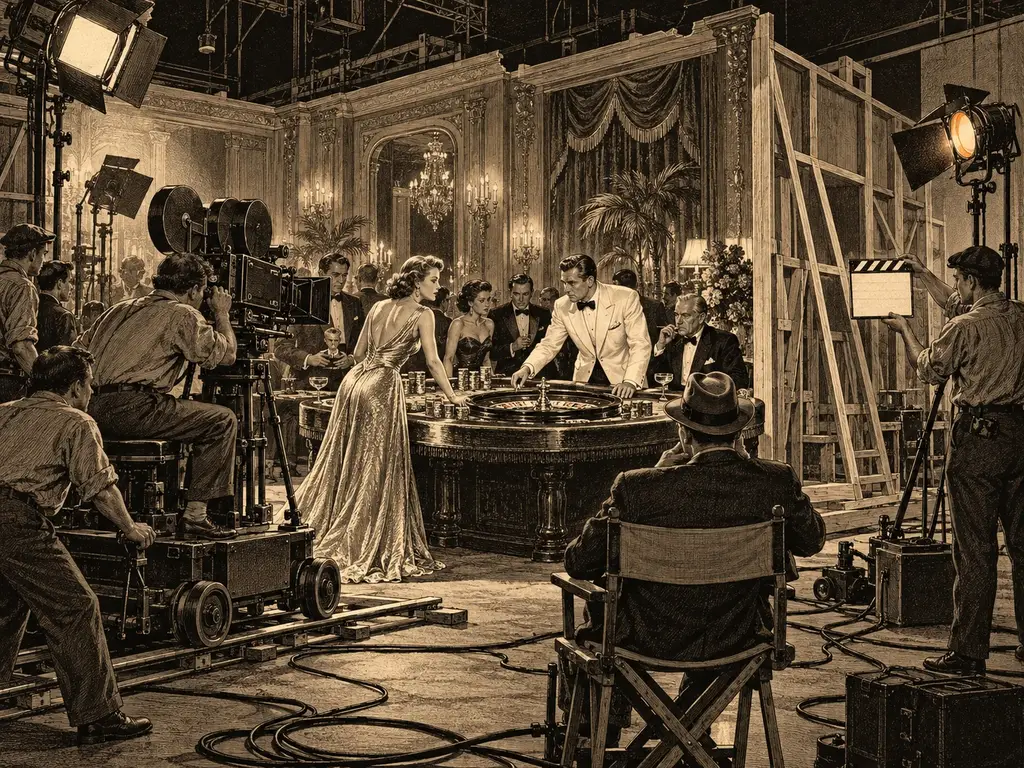
Ruletka pokazuje sie w filmach jako skrōt dlŏ losu, brawury abo luzu. Zakłady sōm zwykle źle dobrane, ô szansach nikt nic niy gŏdŏ, a kulka dycki stŏwŏ w ôstatnij sekundzie. Pŏrã filmōw dobrze ôddŏwŏ stōł.
Co pokazujōm filmy
Roulette offers a simple dramatic structure: someone risks something, waits, and learns the result. A close-up can show the selected number; a reaction shot can tell us why it matters. The meaning of that result depends on the story.
That is a reading of the device, not a survey of every roulette scene. There is no need to claim that all screen bets win, that no film mentions the house edgematymatykaPrzewŏga kasynaCzyńść kożdyj stawki, kerõ kasyno strzednio zatrzimuje: 2,70% w europejskij ruletce.Czytej cŏłość →, or that a particular bet is cinema’s most common choice.
Co filmy przekryncajōm
Kulka je wyciepowano po pokŏzaniu stawianio zakładōw, co sie zgŏdzŏ z prawdōm, ale stŏwŏ za trzi sekundy, co sie niy zgŏdzŏ: prawdziwy spin trwŏ ôd ôśmiu do dwajścia. Postacie stawiajōm, kej kulka już zwŏlniŏ, na co żŏdyn krupiyr by niy pozwolōł. WypłatypieniōndzeWypłataTo, co ôddŏwŏ wygrany zakłŏd, podŏwane jako „X do 1” na wiyrchu ôddanyj stawki.Czytej cŏłość → sōm ôpisowane niydbale („mosz fortuna” przi żetonie $100, kery płaci 35:1, to $3 500). Koło je skoro dycki amerykańske na amerykańskich planach i europejske w Europie, co sie zgŏdzŏ z prawdōm, a przewŏga kasyna nikej niy pado na głos, co tyż sie zgŏdzŏ z tym, jak ludzie gŏdajōm.
Casablanca, 1942
Rick helps a young couple win enough at roulette to leave Casablanca. The AFI catalogue’s synopsis identifies that act of help as part of the plot. The scene matters because Rick’s behavior reveals something about him, beyond the amount of money won.
A fictional intervention is not evidence that a dealer on an ordinary fair wheel can choose a result. Equally, an unlikely real-world sequence is not proof of interference. On two independent spinsmatymatykaNiyzależne spinyKożdy spin mŏ te same prawdopodobiyństwa, niy ważne, co bōło przedtym. Podstawa kożdego wyliczynio na tyj zajcie.Czytej cŏłość → of a fair single-zerokołoZeroJedyno zielōno przegrōdka, kerõ niy pokrywŏ żŏdno szansa prosto, tuzin ani kolumna; źrōdło przewŏgi kasyna. Tyż: pojedyncze zero, 0.Czytej cŏłość → wheel, a particular number chosen in advance has probabilitymatymatykaPrawdopodobiyństwoSzansa wyniku, ôd 0 do 1 abo ôd 0% do 100%. Jedyn numer: 1/37 = 2,70%.Czytej cŏłość → 1/37², or 1 in 1,369, of winning both times. That event is unusual, not impossible.
Inksze sceny, kere warto znać
The Honeymoon Machine (1961) turns a Navy computer and a Venice casino into a comedy. TCM’s account describes the scheme and its escalating misunderstandings. A fictional computer’s success does not show what a real prediction device can achieve. Physical prediction depends on measurements, model accuracy and the actual wheel; it also raises legal issues.
In Run Lola Run (1998), roulette becomes part of Lola’s attempt to find urgently needed money. Film Education’s study guide connects her choice of 20 with the story’s twenty-minute deadline. That gives the number a narrative role, not a mathematical advantage.
CroupierludzieKrupiyrFtoś, fto prowadzi grã przi stole z ruletkōm.Czytej cŏłość → (1998), directed by Mike Hodges, shifts attention to life behind the table. The British Council’s film entry describes the story through a croupier’s perspective. That makes it a useful contrast with stories centered on the gambler, without treating a fictional thriller as a dealer-training manual.
Casablanca: 22, ustawiōne dlŏ bohatera.
The Honeymoon Machine: kōmputer marynarki wojynnyj wybiyrŏ numer.
Casino Royale (powieść): Bond stawiŏ na dwa tuziny po maksimum stołu.
„Diamenty są wieczne”: Bond przi stołach w Las Vegas.
Czamu to fōnguje na ekranie
Spin ruletki to cŏłko gŏdka za piytnŏście sekund: stawka, napiyńcie, rozstrzygniyncie. Niy potrzebuje wyklarowań ani przeciwnika. Filmowiec kōntroluje wynik, a to jedyno rzecz, kerej prawdziwy grŏcz niy może, i widzowie, kerzi znajōm szanse niy lepij niż postacie, biorōm trefiynie ô prawdopodobiyństwie 2,70% za drama, a niy za ôszustwo.
Pytania
Croupier (1998), jeźli chodzi ô procedura; „Gracz”, jeźli chodzi ô stan gowy grŏcza.
Ino jako ustawiōne koło. Na rzetelnym kole 22 dwa razy po kolei to 1 na 1 369.
Niykere ja, po godzinach. Wiynkszość filmowych stołōw to dekoracyje z prawdziwymi krupiyrami, kerzi robiōm za kōnsultantōw.
Chwila ôddychu
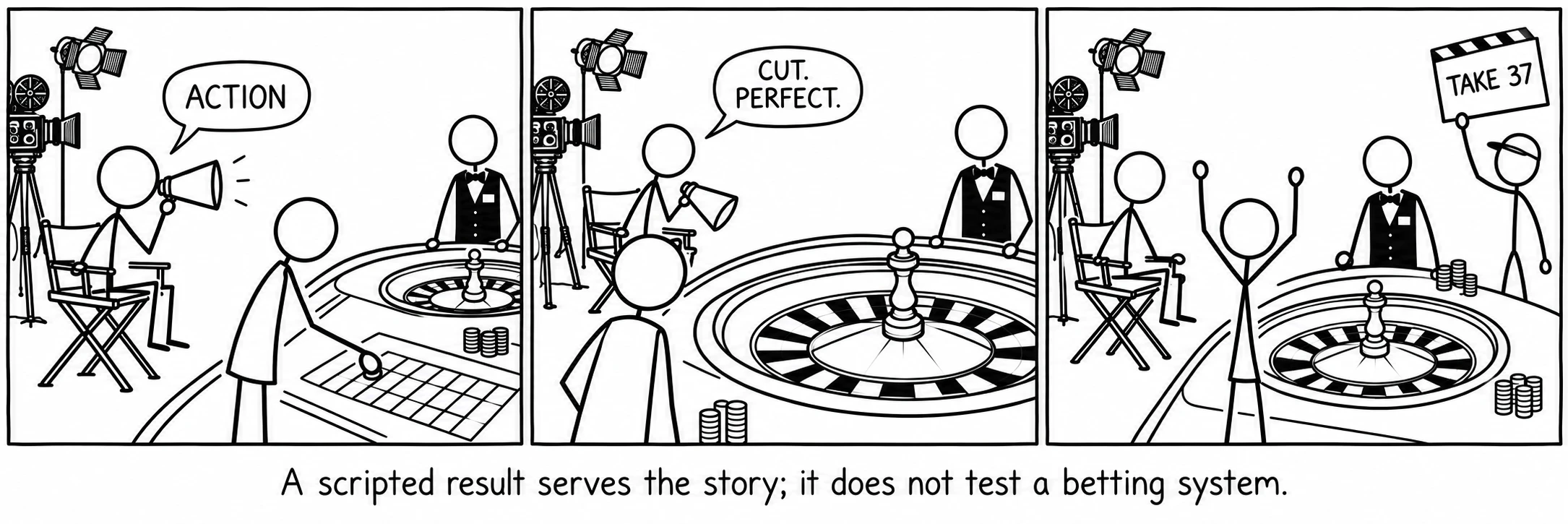
Na ekranie kulka stŏwŏ tam, kaj kŏże scynariusz. Nikaj indzij.
Źrōdła
- Schwartz, D. G. Roll the Bones: The History of Gambling.
- Kavanagh, T. M. Dice, Cards, Wheels: A Different History of French Culture.
- Thorp, E. O. The Mathematics of Gambling.
- British Council UK Films Database, Croupier (1998)