Historyjŏ systemōw do ruletki
Dwa stulecia ludzi, kerzi spisowali regle zmiany stawki.
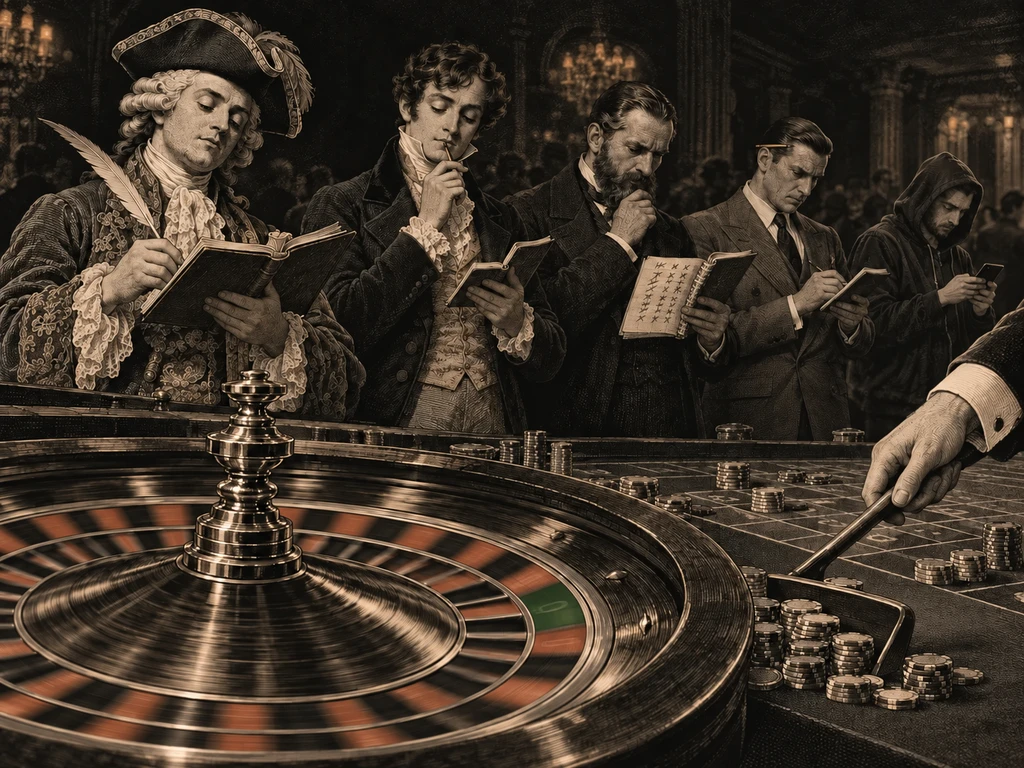
Martingale je z XVIII wieku; d'Alembert nosi miano matymatyka, kery go niy lubiōł; Labouchère to hobby wiktoriańskigo polityka. Żŏdyn z nich wtedy tyż niy działoł.
Martingale
The 1762 Académie française dictionary records martingalestrategijŏMartingaleProgresjŏ, kero podwajŏ zakłŏd po kożdyj przegranyj. Co robi, a czego niy, ôpisuje dziŏł Strategije.Czytej cŏłość → as a gambling term for staking what has been lost. Its 1878 edition explicitly describes doubling after a loss and also uses the word more broadly for betting schemes. These entries document usage; they do not identify a single inventor.
Today the familiar doubling progressionstrategijŏProgresjŏKożdo regla, kero zmiyniŏ stawkã podug wcześniyjszych wynikōw. Ujymne progresyje podnoszōm jõ po przegranych, dodatnie po wygranych.Czytej cŏłość → aims to recover previous losses and gain one starting unitpieniōndzeJednostkaBazowo stawka, w keryj liczy system abo grŏcz. Progresyje ôpisuje sie w jednostkach, coby pasowały do kożdego stołu.Czytej cŏłość → when a win arrives. A finite bankrollpieniōndzeBankrollCŏłko suma ôdłożōno na granie. Zarzōndzanie bankrollym to je decydowanie, wiela z niego ryzykować na jedyn zakłŏd i na jednõ sesjã.Czytej cŏłość → or table limitstōłLimit stołuNojmyńszy i nojsrogszy dozwolōny zakłŏd. To maksimum zatrzimuje progresyje, kere podwajajōm stawkã.Czytej cŏłość → can stop the sequence first. The Strategy section shows how those limits affect a session.
D'Alembert
The progression bearing d’Alembert’s name raises the stake by one unit after a loss and lowers it after a win. The name alone does not prove who devised or endorsed the betting rule.
Its mathematical issue is straightforward: on independent spinsmatymatykaNiyzależne spinyKożdy spin mŏ te same prawdopodobiyństwa, niy ważne, co bōło przedtym. Podstawa kożdego wyliczynio na tyj zajcie.Czytej cŏłość →, a run of one outcome does not make the opposite outcome due. A famous namesake does not change that assumption or the payoutpieniōndzeWypłataTo, co ôddŏwŏ wygrany zakłŏd, podŏwane jako „X do 1” na wiyrchu ôddanyj stawki.Czytej cŏłość →.
Labouchère
The cancellation system uses a list of numbers to determine the next stake. A win removes entries and a loss adds an entry; the Strategy section sets out the rules and examples. Historical stories about its namesake should be distinguished from evidence that the method creates an advantage.
A sequence may clear with a profit, but a losing run can leave a growing list and larger required stakes. How often it clears depends on the starting list, bankroll, limits and stopping rule. There is no universal success percentage.
XX wiek
A simulation can show how a specified system behaves under a chosen wheel model. It cannot test every possible rule, and a finite run need not return exactly the theoretical house edgematymatykaPrzewŏga kasynaCzyńść kożdyj stawki, kerõ kasyno strzednio zatrzimuje: 2,70% w europejskij ruletce.Czytej cŏłość →.
For independent uniform single-zerokołoZeroJedyno zielōno przegrōdka, kerõ niy pokrywŏ żŏdno szansa prosto, tuzin ani kolumna; źrōdło przewŏgi kasyna. Tyż: pojedyncze zero, 0.Czytej cŏłość → spins with standard full-loss-on-zero payouts, each unit staked has expected net return −1/37. For a bounded session whose stakes are chosen using information available before each spin, adding the conditional expectations gives expected lossmatymatykaÔczekiwano strataÔczekiwano wartość razy cŏłko postawiōno suma; strzednio strata za sesjã abo za jakiś czas.Czytej cŏłość → equal to 1/37 of expected turnoverpieniōndzeÔbrōtCŏłko suma postawiōno bez sesjã abo bez jakiś czas, razym z zaś postawiōnymi wygranymi. Tyż: handle, action.Czytej cŏłość →. Stopping or changing stakes can change the distribution of results, but not create positive expectation under those assumptions. Other payouts, such as la partagereglaLa partageFrancusko regla: kej wypadnie zero, połowa stawki na szansie prostyj wrŏcŏ. Zmyńszŏ przewŏgã kasyna na tych zakładach do połowy, do 1,35%.Czytej cŏłość →, need their own calculation.
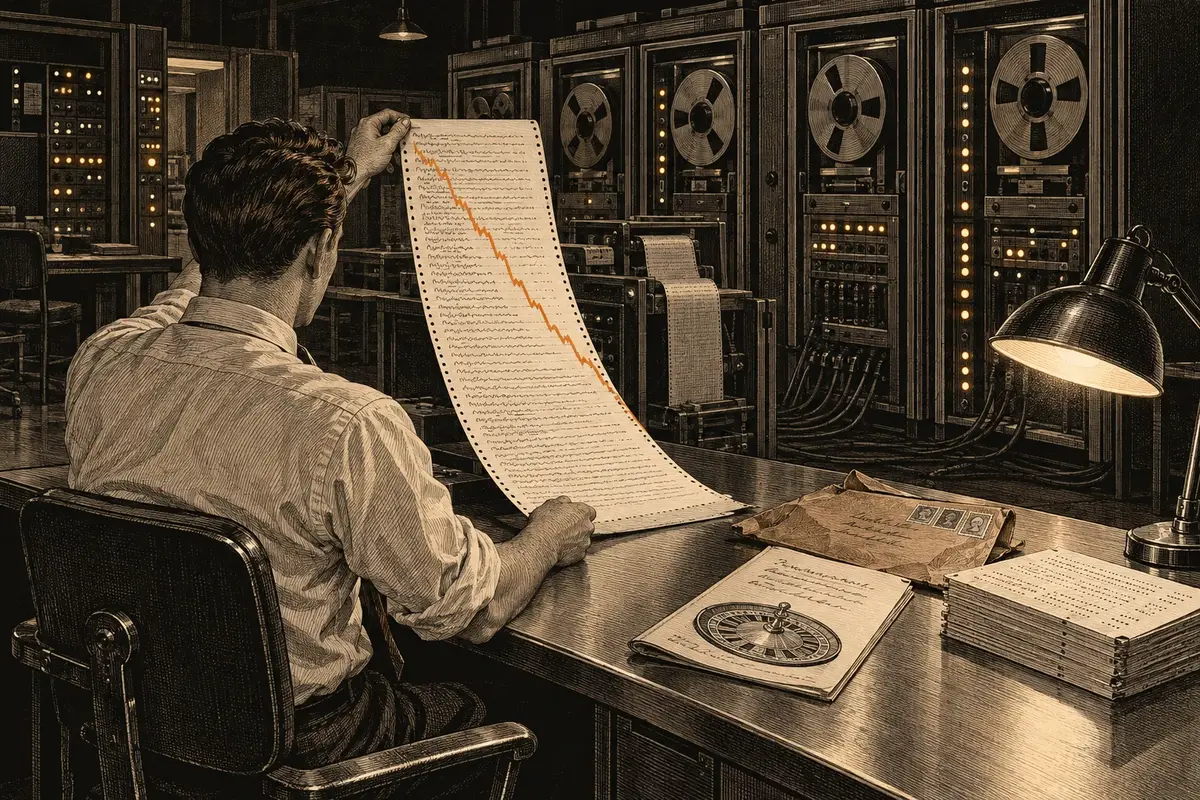
Myt: strategijŏ, kero dycki wygrywŏSystem Fibonacciego w ruletce
Czamu przetrwały
A demonstration can end in profit without showing that the method has an edge. Some rules favor frequent small wins at the cost of occasional large losses; others do the reverse. The proportions depend on the exact rules and limits.
When comparing systems, look at all completed sessions, total stakes, losses and stopping conditions. A selected winning example leaves out the information needed to assess the claim.
Systymy na przedej
Systems have also been sold with elaborate names and entry rules. The examples below illustrate the arithmetic of specific rules; they are not evidence of who first invented or marketed them. Waiting for a pattern does not alter the next independent spin’s probabilities.
Tyn, co niy je systymym
Regle stopu: ustalić z gōry, wiela przegrać abo wygrać, i ôdyjść. Czynsto sie je sprzedŏwŏ jako czyńść systymu i to je jedyno czyńść, kero cosik robi, bo zmyńszajōm ôbrōt. Niy majōm patrōna, co pasuje.
Pytania
Martingale, ô stulecie abo wiyncyj. Podwajanie po przegranyj to piyrszy pomysł, na kery kożdy wpadnie.
D'Alembert bōł nojbliżyj, bez przipadek. Pascal, Fermat, Huygens, Bernoulli i Laplace wyjaśnili, czamu systymy niy działajōm.
Bo wiynkszo czyńść sesyji kōńczy sie wygranōm, a wideo z wygranōm sesyjōm je tanie we zrobiyniu.
Chwila ôddychu
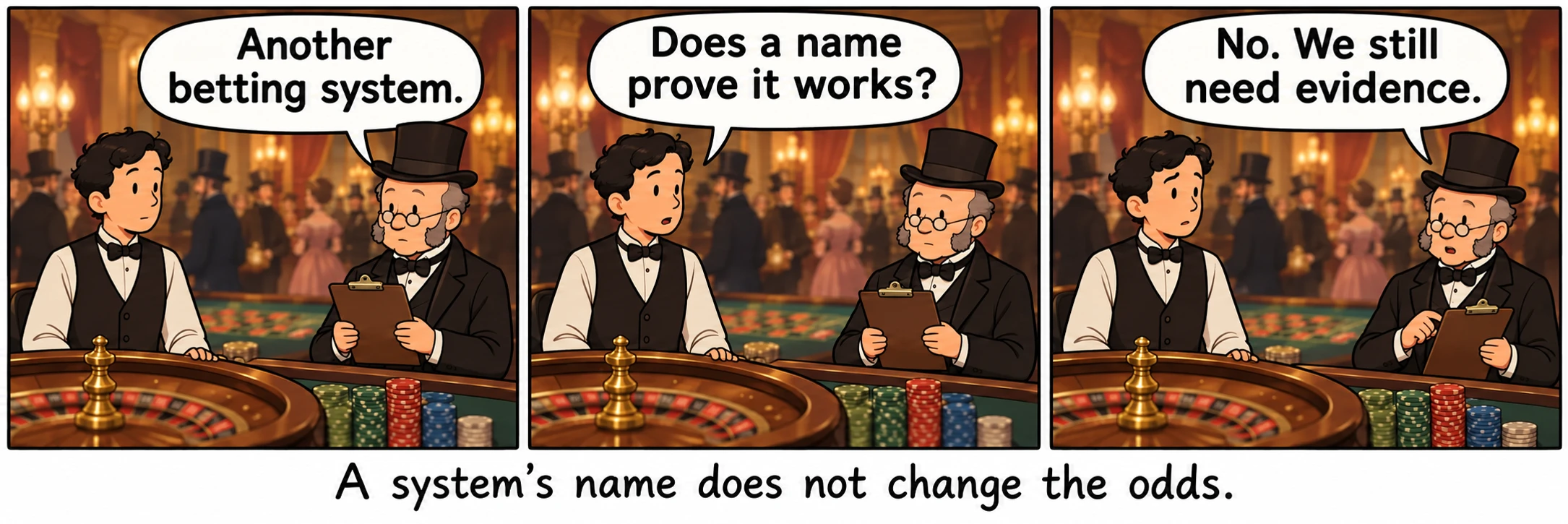
Dwa stulecia nazwisk. Jedna liczba.
Źrōdła
- Thorp, E. O. „Optimal gambling systems for favorable games.”
- Thorp, E. O. The Mathematics of Gambling.
- Doob, J. L. „Note on probability.”
- Halmos, P. R. „Invariants of certain stochastic transformations: the mathematical theory of gambling systems.”
- d'Alembert, J. „Croix ou pile.”
- Schwartz, D. G. Roll the Bones: The History of Gambling.
- Kavanagh, T. M. Dice, Cards, Wheels: A Different History of French Culture.
- Bollman, M. Mathematics of the Big Four Casino Table Games: Blackjack, Baccarat, Craps, & Roulette.
- Académie française, martingale, 1762
- Académie française, martingale, 1878